Climate activists face prison demands and new blockade on the A12: what it means for the Netherlands
Extinction Rebellion activists face 120-hour community service and conditional prison demands for blocking the A12 in April, while a new blockade on the same highway was dismantled on 29 August. The cases show Dutch authorities are taking a hard line against highway protests, with potential criminal record and driving licence implications for participants.
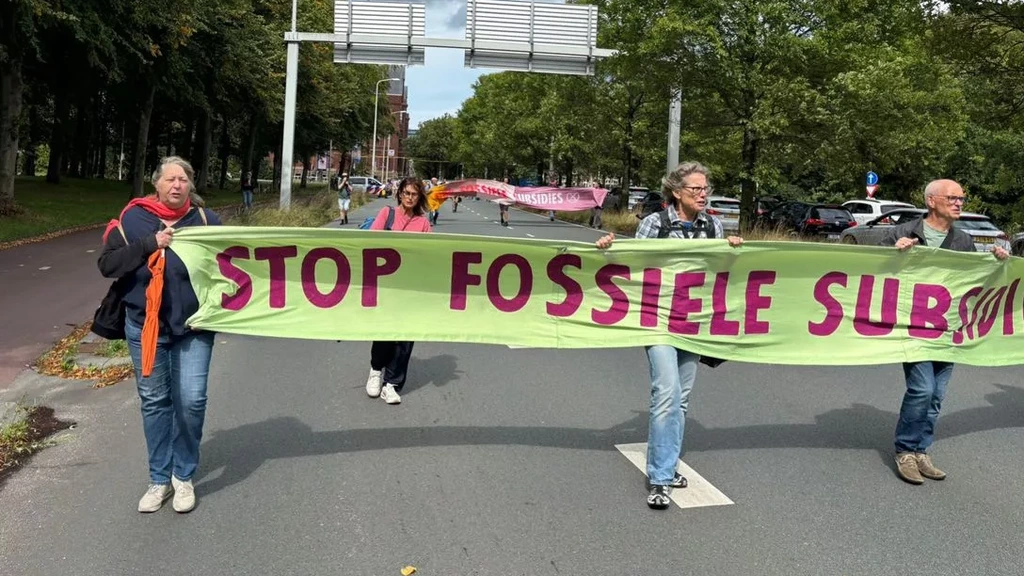
The tension between climate activism and public order enforcement in the Netherlands escalated again this week, with Extinction Rebellion (XR) blocking the A12 highway near The Hague on Saturday 29 August – just days after prosecutors demanded community service and conditional prison sentences for six activists who did the same in April.
On Saturday, "several dozen" activists walked onto the Utrechtsebaan section of the A12 in The Hague, a stretch of road that has become a familiar protest site for the group. According to ANP and the local municipality, authorities immediately began removing the blockade. The action came less than two weeks after mayors, the Public Prosecution Service (Openbaar Ministerie, OM) and police jointly declared that highway blockades – whether by farmers or climate activists – would not be tolerated because they create an “unacceptable danger.”
That warning was swiftly followed by concrete legal consequences. On Wednesday 26 August, the OM demanded 120 hours of community service and a one-month conditional prison sentence for six XR activists who blocked the A12 near Utrecht on 25 April. The demonstration had been banned by the mayor of Utrecht. Yet the group carried out a coordinated operation: three cars stopped sideways on the main carriageway and three on an exit ramp from the A2, allowing activists to run onto the highway from the verge.
The legal reasoning
In court, the activists argued that they stopped traffic in a “slow, controlled and safe” manner and that emergency services were not hindered. One defendant told the judge: “I see climate disaster after climate disaster. It is my duty to rebel.” Another acknowledged the disruption but insisted they took precautions to minimise risk.
The prosecutor was unconvinced. “The boundaries have been crossed,” she said, calling the deliberate creation of a traffic jam “dangerous” and noting a “disregard for public authority.” The OM also pointed to the high risk of reoffending: three of the six had been arrested again at other demonstrations since April. As well as the proposed 120-hour community service and conditional one-month prison sentence, the activists already spent three days and two nights in pre-trial detention and lost their driving licences for over two months.
What this means for you – even if you aren’t a protester
For expats and internationals living in the Netherlands, these cases might seem distant – but they illustrate a broader trend. The Dutch legal system treats highway blockades as serious criminal offences, not civil disobedience. The OM’s hard line is echoed by local mayors and police, who now coordinate to remove blockades “immediately.”
If you are involved in a protest – whether as a participant or a bystander – be aware that arrests can lead to a criminal record, which may affect visa renewals or future residence permit applications. The loss of a driving licence (rijbewijs) for months is also a real consequence. For those with a Dutch driving licence who use a car for work, the impact is immediate.
The bigger picture
The April 25 case is scheduled for a verdict later this year. Meanwhile, the 29 August blockade may well lead to fresh charges. The A12 protests have become a symbolic flashpoint: XR targets the highway because it runs past the Ministry of Economic Affairs and Climate, demanding an end to fossil fuel subsidies. The government’s response has been consistently firm, and the courts seem inclined to back that stance.
These legal proceedings are being watched closely by both climate activists and law enforcement. For now, the message from The Hague is clear: blockading the A12 will cost you time, money and possibly your freedom.
Sources: NOS – XR bezet A12 bij Den Haag; NOS – OM eist werkstraffen tegen zes klimaatactivisten
Sources
- OM eist werkstraffen tegen zes klimaatactivisten voor blokkeren A12 August 26, 2026
- Extinction Rebellion bezet A12 bij Den Haag August 29, 2026
- Alleen excuses voor problemen jeugdzorg niet genoeg: 'Wegkijken is makkelijker' August 29, 2026
Part of the dossier
Climate Activism Legal Cases in Netherlands →