New Dutch freelancer law: the concrete criteria that could decide your zzp status
The Dutch government has proposed a new law with concrete criteria for who counts as a genuine freelancer (zzp'er), after stricter enforcement against false self-employment caused clients to drop freelancers. Meanwhile, self-employment has fallen by 131,000 — but most former freelancers quickly found new jobs. Here's what it means for internationals on residence permits.
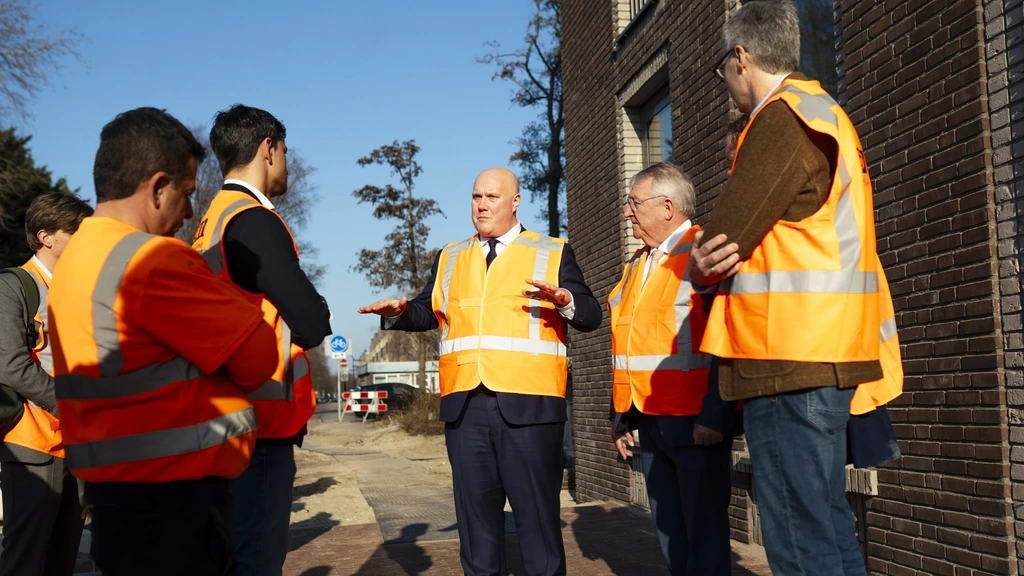
If you work as a freelancer in the Netherlands — or are thinking of becoming one — the rules of the game are changing. Minister Thierry Aartsen of Employment (Werk en Participatie) has unveiled a draft law designed to end years of confusion over who counts as a genuine self-employed worker (zzp'er, or zelfstandige zonder personeel) and who is actually doing the work of an employee. The stakes are high: with the Tax Authority (Belastingdienst) enforcing the rules against false self-employment (schijnzelfstandigheid) since 1 January 2026, clients have been dropping freelancers out of fear of back-tax assessments. Aartsen says the new criteria will give both sides certainty. As he told NOS: “If you meet them, you can be certain that you need not fear back-tax assessments.”
The checklist
The proposed law sets out a mix of administrative and practical tests. To qualify as a genuine freelancer, you must:
- Be registered with the Chamber of Commerce (Kamer van Koophandel, KvK);
- Have a VAT number (btw-nummer) and a business bank account;
- Issue invoices and make business-related payments;
- Have at least three different clients over a two-year period;
- Actively seek new clients.
You also need to work independently, bear entrepreneurial risk, and be free to decide where, when and how you do the work — unless the nature of the job dictates otherwise, such as a construction site or emergency repairs outside office hours. The draft also requires freelancers to make provisions employees don't need: insurance against illness and incapacity for work, pensions, and liability cover. A minimum amount for these provisions is still being worked out, NL Times reports.
Self-employment is shrinking
The stricter enforcement is already having an effect. According to the Dutch central bank (DNB), the number of self-employed workers fell by around 131,000 — about 10% — between the end of 2024 and mid-2026. It's the first decline in two decades. But the DNB says it's not a jobs disaster: half of former freelancers found paid work within three months, and only 7% became unemployed. Many moved to different sectors entirely, particularly healthcare, education, retail and hospitality. The DNB said it cannot prove the enforcement explains the drop, but it noted high movement in sectors where false self-employment is often debated, as DutchNews.nl reported.
What this means for internationals
If you're living in the Netherlands on a residence permit linked to your own business — for example the self-employed residence permit under the Dutch American Friendship Treaty (DAFT) or the ‘verblijf als zelfstandige’ scheme — this matters in two ways.
First, the Tax Authority and the Immigration and Naturalisation Service (IND) look at your business credibility. The proposed criteria give you a practical checklist to document your status: keep your KvK registration current, use a separate business bank account, issue proper invoices, and maintain at least three clients over two years. If you're just starting out, the three-client rule could be tricky — the minister has not yet said how it will apply to newcomers.
Second, if you take on freelance work alongside a job, the law could push more companies to offer you a formal employment contract instead. That may actually strengthen your residence permit position, since salaried employment makes your income more predictable for the IND.
The draft law hasn't been formally introduced to parliament yet, and the timeline for implementation is still unknown. But the direction is clear: the Dutch government wants to draw a line under the grey zone. For everyone living here on a residence permit, the lesson is to keep your paperwork in order — and your client list longer than one.
Sources
- Zelfstandigenwet moet zzp'ers en opdrachtgevers duidelijkheid geven October 1, 2026
- New law to provide clarity on when a worker qualifies as a freelancer October 1, 2026
- Self-employment declines as freelancers quickly find new jobs October 16, 2026
Part of the dossier
Dutch Self-Employed Law Aims to Clarify ZZP Status →