Dutch harvest shrinks, prices rise — and farmers now face new nitrogen cuts
Prolonged drought has reduced Dutch crop yields by 10-30%, but higher market prices have largely kept farmers profitable. Meanwhile, the government's nitrogen plan falls short of its 2035 target, prompting calls for compulsory cuts in livestock — a move the agriculture minister firmly rejects.
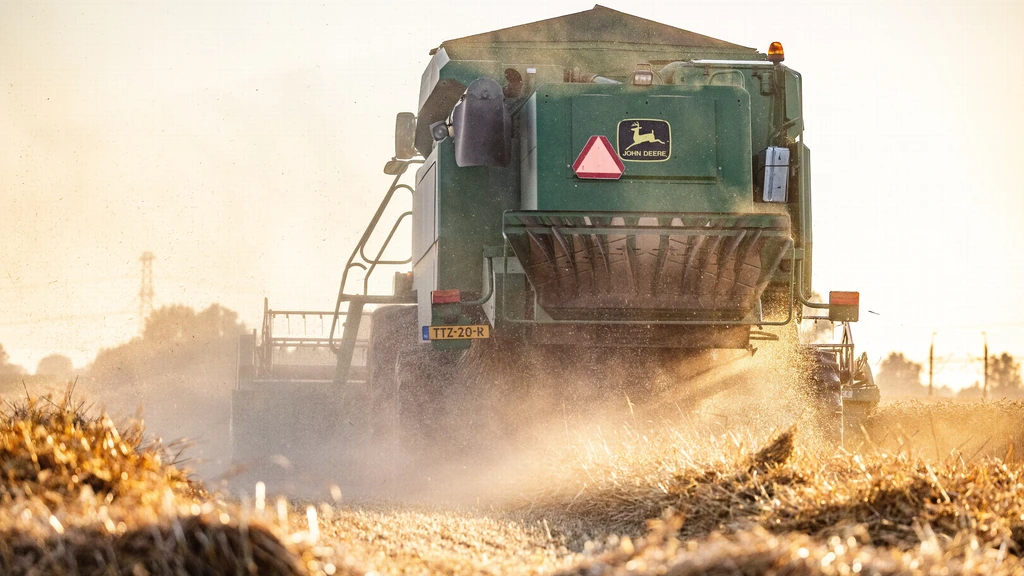
Dutch farmers are bringing in 10 to 30 percent less food than normal this year after a prolonged summer drought, but higher market prices are keeping many afloat. The same farmers now also face the prospect of compulsory cuts in the number of animals they may keep, after the government’s environmental assessment agency warned that the cabinet’s €20 billion nitrogen plan will fall short of its own 2035 target.
For expats and internationals living in the Netherlands, the dual news means two things: the price of Dutch potatoes, onions, carrots and other field crops may remain elevated this winter, and the political battle over farming emissions — a constant feature of Dutch politics — is far from resolved.
Smaller crops, higher prices
André Hoogendijk, director of BO Akkerbouw, the sector’s knowledge centre, told Trouw that harvest volumes are down 10 to 30 percent across the board. Carrots, onions and potatoes are smaller and lighter than normal. Lettuce heads are lighter too — “if you normally get 6 kilos in a box with ten heads, you now only get 4 or 5 kilos,” Jordi van den Bosch, owner of vegetable store Freeland, said in the same article (NL Times, 29 Aug 2026).
Farmers who were not allowed to irrigate — mainly on sandy soils in the east and south — are hit hardest. Yet Hoogendijk does not call it a failed harvest. Prices on the free market have risen because the entire North-West European region has poor yields, partly influenced by ongoing wars. Farmers who sold their harvest in advance on contract are losing out; those who held back are now benefiting (NOS, 29 Aug 2026).
“Last year farmers were happy if they had sold their harvest in advance, and those who had not had to sell their potatoes for almost nothing. Now the farmers who have not yet sold are happy,” Hoogendijk said.
The upshot for consumers: prices in shops may stay higher through autumn and winter, but availability is not expected to collapse, because the Netherlands still has fertile ground and better access to fresh water than neighbouring countries.
Nitrogen plan falls short
On the policy front, the PBL Netherlands Environmental Assessment Agency assessed the cabinet’s €20 billion plan to reduce ammonia emissions from livestock farming and found it an important step — but not enough. Under the plan agreed in June, farmers must cut ammonia emissions by 42 to 46 percent by 2035 (compared with 2019 levels). PBL calculates that even after the planned measures, a gap remains, and that an across-the-board cut of 5 to 10 percent in farmers’ livestock rights (the permits that cap how many animals a farm may hold) would still be needed to reach the target (DutchNews, 4 Sept 2026).
Agriculture minister Jaimi van Essen immediately rejected a blanket cut, calling it an “emergency brake” and “a no-go for this cabinet.” The coalition has always treated compulsory cuts as a last resort, to be triggered only if 2035 targets are missed. PBL warned that even with the new rules, more than half the area of the most sensitive nature reserves would still exceed critical nitrogen deposition levels.
Nature groups call the plan the bare minimum. The farmers’ party BBB and the main farm lobby LTO said an extra cut is unacceptable, though LTO is staying at the negotiating table.
What does this mean for you?
For internationals in the Netherlands, two things matter. First, the drought story is a quiet reminder that Dutch food prices are tied to global and regional shocks — war, weather, water permits. Don’t be surprised if your supermarket potatoes cost notably more than last year.
Second, the nitrogen impasse is not going away. The cabinet’s plan is under pressure, and if the 2035 target is formally missed, compulsory cuts could still be imposed. That would affect not only farmers but also the construction industry (which is partly blocked by nitrogen rules) and the housing goals the government has set. The poldermodel will be tested again over the coming months as the coalition, farmers, and environmental groups hash out the final details.
Sources
- Minder oogst door de droogte, maar compensatie door hogere prijzen August 29, 2026
- Dutch farmers report fewer crops, smaller carrots, onions and potatoes after drought August 29, 2026
- Farmers face livestock cuts as nitrogen plan falls short September 4, 2026
Part of the dossier
Dutch Agriculture: Drought Impact on Crop Yields and Prices →