Dutch Nitrogen Talks Divide Farmers – What It Means for Expats Waiting on Permits
Dutch nitrogen talks are stalled by a split among farmer groups, with only LTO and NAJK at the table. For expats, this delays permit issuance for housing and business, prolonging the Netherlands' construction freeze.
The Dutch government’s push to cut nitrogen emissions has hit another snag, but this time the obstacle is not just angry farmers blocking highways – it’s a split among the farmers themselves over who gets a seat at the negotiating table. For internationals in the Netherlands, the outcome of this internal battle could determine how soon the country can start issuing building permits again, and by extension, how long the housing crisis will last.
Who’s in the room?
Since taking office, Minister of Agriculture and Nature, Femke van Essen, has been holding weekly talks with the two largest agricultural organisations: LTO (the main farmers’ union) and NAJK (the young farmers’ association). These meetings are meant to “improve” her nitrogen plans – plans that aim to reduce emissions near nature reserves so that the government can once again issue permits for construction and other economic activities.
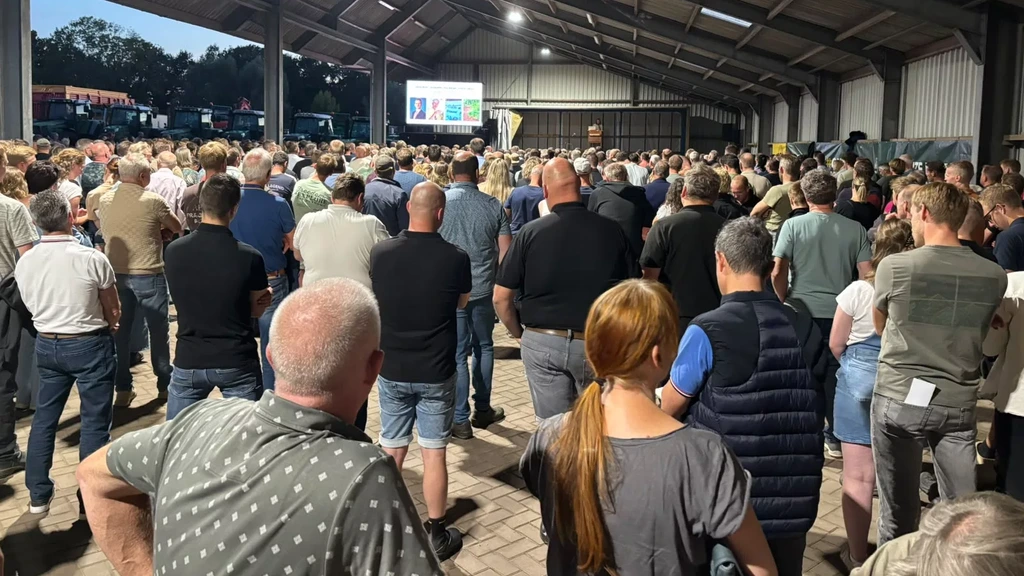
But other farming groups, notably Agractie and several smaller organisations, say they are being left out. At a mobilisation event in Scherpenzeel on Tuesday evening – described by attendees as a “festival” with protest signs and orange-vested stewards – speakers from the podium accused LTO and NAJK of not representing all farmers. “They do not speak for all of us,” the crowd heard.
Minister says ‘everyone is welcome’
In an interview with NOS today, Minister Van Essen pushed back against the exclusion claim. “Agractie is welcome to participate,” she said. But she did not explain why they are not currently in the weekly talks. The ministry’s position is that LTO and NAJK are the largest representative bodies, and that the government needs to move quickly. “We want to implement the plans as soon as possible to improve nature and resume permit issuance,” a spokesperson told NOS.
Why this matters for permit holders
Here’s the part that directly affects expats. The entire nitrogen debate is about the Programma Aanpak Stikstof (PAS), a programme that was meant to allow economic growth while protecting nature. But in 2019, the Council of State ruled that the PAS was illegal, effectively freezing permit issuance for projects that emit nitrogen – including new housing construction, road expansions, and even some business expansions.
Since then, every new housing project has to prove it will not add to the nitrogen burden. That has stalled thousands of homes. The government’s new plans aim to reduce emissions near Natura 2000 areas, creating “room” for permits again. But if farmers cannot agree on the details, the plans could be delayed or watered down.
What happens next?
For now, the weekly talks proceed with LTO and NAJK. NAJK chair Gerben Boom said they discussed “zones around nature reserves” where the minister wants to cut emissions. “We think the zones can often be smaller than the minister intends,” Boom told NOS. LTO leader Ger Koopmans called the meeting “a good discussion.”
But Agractie and its allies say they will continue to pressure the minister to include the entire sector. Given the Netherlands’ history of consensus-building – the famous polder model – it is unlikely that a major policy can succeed without broad support. If the minister pushes ahead with only LTO and NAJK on board, expect more protests, more legal challenges, and more delays.
Practical takeaway for expats
- Housing: If you are waiting for a new-build home, the nitrogen impasse remains a bottleneck. The more fragmented the farming sector, the harder it is to reach a deal that unlocks construction permits.
- Permits for businesses: If you are an entrepreneur looking to expand or set up a facility that emits nitrogen (e.g., a logistics centre or a farm), expect continued uncertainty.
- Your voice: The government’s consultation website (www.internetconsultatie.nl) is open for public input on nitrogen plans. Internationals can submit comments too, though the forms are in Dutch. Organisations like Woonbond (tenants’ union) often provide English-language summaries.
As the Dutch saying goes: “Met z’n allen maak je de dijk” – together you build the dike. But if the farmers can’t agree on who is part of “together,” the dike may remain unfinished for a while longer.
Sources: NOS – Boeren verdeeld over stikstofgesprekken minister
Sources
Part of the dossier
Dutch Nitrogen Policy and Farmer Protests →