EU sanctions split and AfD surge: What Europe’s far-right gains mean for Ukraine and the Netherlands
The EU lifted sanctions on oligarchs Usmanov and Fridman after French pressure, alarming Brussels. Meanwhile, Germany’s far-right AfD won a state election, boosting Kremlin-friendly forces. For expats in the Netherlands, this signals a fracturing European unity on Russia policy.
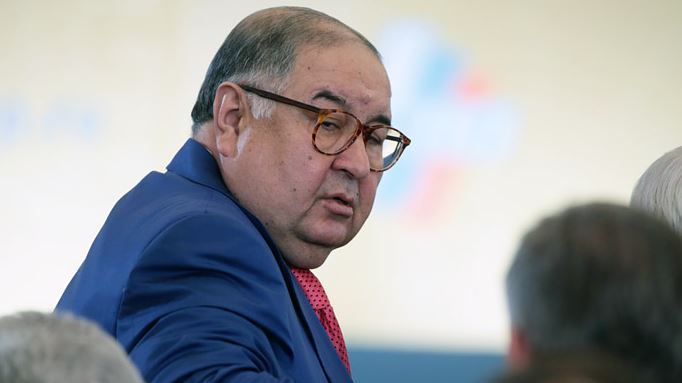
This week, two seemingly separate stories from Brussels and Berlin converged into one worrying picture for European unity on Russia: the EU lifted sanctions on two Russian oligarchs after French pressure, while Germany’s far-right Alternative for Germany (AfD) won a state election, bringing a Kremlin-friendly party closer to national power.
For expats in the Netherlands, the implications are concrete. The Netherlands, as a strong advocate of EU sanctions on Russia, now faces a precedent where a member state can break the sanctions consensus for its own bilateral interests. Meanwhile, a rising far-right in Germany could shift the EU’s centre of gravity on Ukraine policy, potentially weakening the bloc’s resolve just as the US under Donald Trump pursues its own deal with Moscow.
The sanctions precedent that worries Brussels
On 24 September, the EU removed Uzbek-Russian oligarch Alisher Usmanov and Mikhail Fridman from its sanctions list, following a push by France. According to Euronews, as reported by Ukrainska Pravda, the move left officials and diplomats in Brussels with a “bitter aftertaste.” One diplomat described it as “a low moment”; another said, “No one is happy about this.”
France had surprised its EU colleagues earlier this month by joining Slovakia in calling for Usmanov’s removal, citing “national security.” It later emerged that Paris was trying to secure the release of two French citizens detained in Azerbaijan. The day after Usmanov was delisted, Azerbaijan pardoned French national Martin Ryan, who had been sentenced to 10 years for espionage.
To compensate, member states agreed to extend sanctions on nearly 3,000 other individuals for an unprecedented 36 months and to prevent future vetoes. But the damage may be done. Ireland, which brokered the compromise, called the situation “difficult.” The fear, as one diplomat put it, is that Paris has “opened Pandora’s box,” encouraging other oligarchs to lobby their home countries for delisting.
For the Netherlands — a country that hosts the International Criminal Court and has been a vocal backer of Ukraine — this sets a worrying precedent. If France can break ranks for detainee swaps, what stops another member state from doing the same for energy deals or trade?
AfD’s rise: A gift to the Kremlin
Meanwhile, in Germany, the far-right Alternative for Germany (AfD) won the Saxony-Anhalt state election on 10 September. As Al Jazeera reports, the victory brought the prospect of a Russia-friendly party running a regional government in a core EU member state. For Vladimir Putin, who served as a KGB officer in Dresden, this is “surely satisfying.”
The AfD is now polling six to seven points ahead of Chancellor Friedrich Merz’s Christian Democratic Union (CDU) nationally. The CDU, under Merz, has been losing state elections — as Al Jazeera notes, the party was “obliterated” in another state vote on 23 September. German media blame Merz’s weak campaigning and unpopular coalition with the Social Democrats.
But the deeper trend is structural. The AfD’s surge is not a sudden fascist epiphany but a reaction to years of austerity and deindustrialisation that have left many Germans facing poverty. The party’s platform — anti-immigration, anti-LGBTQ, anti-renewables — resonates especially in former East Germany. If the AfD wins the federal election in 2029, mainstream parties may struggle to uphold the “firewall” (Brandmauer) keeping neo-Nazis out of government.
For the Kremlin, an AfD-led Germany would mean a partner sceptical of EU sanctions on Russia and opposed to arming Ukraine. Putin already had a good week: the SCO summit in Bishkek, followed by Jared Kushner and Steve Witkoff in Moscow for Ukraine talks, as Al Jazeera notes.
What this means for expats in the Netherlands
The Netherlands is not immune. Dutch far-right parties, such as the PVV, have long admired Putin and opposed sanctions. If the AfD normalises far-right governance in Germany, it could embolden similar forces in the Netherlands, potentially affecting the Dutch government’s stance on Ukraine aid and EU sanctions.
More immediately, the EU’s sanctions precedent means that the Netherlands — as a strong sanctions supporter — may need to work harder to maintain unity. The 36-month extension is a stopgap, but the underlying vulnerability remains: any member state can now claim “national security” to break ranks.
For internationals in the Netherlands, the key takeaway is that Europe’s Russia policy is fracturing. The far-right gains in Germany and the sanctions split in Brussels are two sides of the same coin: a weakening of the liberal international order that has underpinned European security since 1945. If you work in defence, energy, or diplomacy, expect more turbulence ahead.
Sources
- Europe’s far right: Putin’s best friend? September 10, 2026
- Europe’s centrists are finally paying the price of their extremism September 23, 2026
- Euronews reveals EU mood after Russian oligarch Usmanov sanctions lifted September 24, 2026
Part of the dossier
Europe's far right and Putin's influence →