German climate activist wanted for grid sabotage had Doetinchem substation on his hit list — Dutch police say they weren't told
German climate activist Daniel V., wanted for sabotaging power grids in Germany, planned an attack on a substation in Doetinchem, Netherlands. Dutch police say they were not informed. The suspect remains at large.
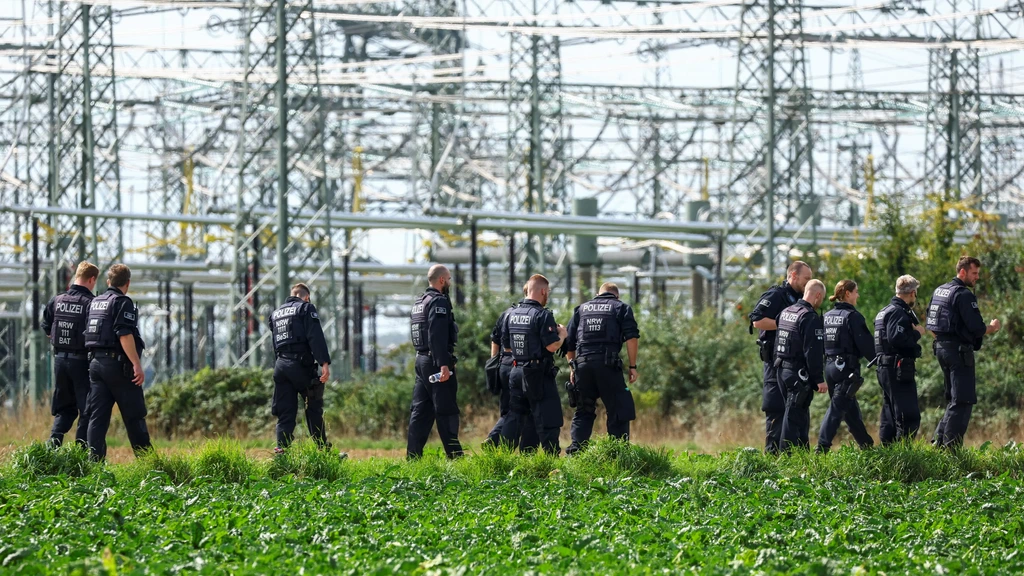
A 48-year-old German climate activist who has already carried out sabotage attacks on power infrastructure in Germany also planned to strike an electrical substation in the Dutch town of Doetinchem, according to a notebook found by German police. Dutch authorities say they were not aware of the threat.
Daniel V., from Gevelsberg in North Rhine-Westphalia, is wanted for two sabotage attempts on electrical substations in the German states of Brandenburg and North Rhine-Westphalia last week. In handwritten letters sent to police and media, he claimed responsibility, describing fossil-fuel electricity generation as "a crime that causes indescribable suffering" and saying he felt compelled to "intervene" because the state and media were not acting. "I prepared everything myself," he wrote.
German police found his converted camper in the Hambach Forest, near a lignite mine, and inside it a notebook listing an electrical substation in Doetinchem as a potential target, the Frankfurter Allgemeine Zeitung reported, citing forensic investigators Source: NOS. The Oost-Nederland police unit told NOS they had not been informed of this threat Source: NL Times.
A raid on V.'s home turned up explosives, but the suspect was not there. German police have launched a large-scale search, including a helicopter with thermal imaging cameras over the Hambach Forest and analysis of data from wildlife cameras Source: NOS. The man remains at large. On Monday, police in Grausstein, eastern Germany, discovered 21 homemade explosive devices near another substation; it is not yet clear whether V. was involved Source: NL Times.
What this means for internationals in the Netherlands
First, the practical risk: the Doetinchem substation is part of the regional high-voltage grid managed by Tennet, the Dutch transmission system operator. A successful attack could cause localised power outages, but would not trigger a nationwide blackout — the grid has redundancy. Still, for anyone living in or near Doetinchem (a city of about 58,000 in Gelderland), the fact that a target was identified is unsettling.
Second, the institutional gap: Oost-Nederland police say they were not informed. That raises questions about cross-border intelligence sharing. If you live near the German border, you may wonder how quickly Dutch authorities would be alerted to threats that originate just a few dozen kilometres away. The Eenheid Oost-Nederland (East Netherlands police unit) is the regional force responsible for Gelderland and Overijssel; their contact for non-emergency reports is 0900-8844. For immediate danger, always call 112.
Third, the political context: the Tweede Kamer (Dutch parliament) has debated energy infrastructure security before, but mostly in the context of cyber threats and Russian sabotage. Physical attacks by domestic activists are rarer. The Dutch Nationaal Coördinator Terrorismebestrijding en Veiligheid (NCTV) sets the threat level; it currently stands at level 3 (substantial) out of 5, but that assessment predates this specific case. Expats should be aware that the NCTV publishes threat assessments in English on its website.
Who is Daniel V.?
V. is described by German authorities as a climate activist who escalated from protest to sabotage. His letters explicitly state that he acted alone. The terrorism investigation in Germany focuses on whether his actions meet the legal definition of terroristische Straftat — in the Netherlands, similar acts would be investigated by the Landelijke Eenheid of the Dutch police, which handles national security cases. No Dutch investigation has been announced yet.
For now, the most concrete advice for anyone in the Netherlands is: if you see suspicious activity near an electrical substation or other critical infrastructure, report it to the police via 112 or the Meld Misdaad Anoniem hotline (0800-7000). The substation in Doetinchem is not publicly named, but given the media coverage, local residents may notice increased police patrols.
We will update this article if Dutch authorities confirm any preventive measures or if the suspect is apprehended.
Sources
Part of the dossier
German Climate Activist Sabotage on Energy Grid →