Jetten I Cabinet's first budget: higher health premiums, postponed welfare cuts, and no clear majority in sight
The minority Jetten I Cabinet enters Budget Day with record low approval and no opposition deal. Health insurance premiums will rise €10/month to €169, while planned welfare cuts are postponed. For expats, this means higher costs but stable benefits for now, amid ongoing political uncertainty.
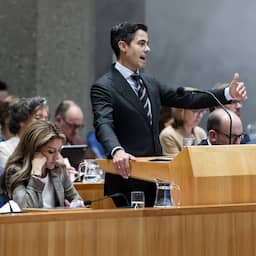
As the Netherlands prepares for Budget Day on Tuesday, the minority Jetten I Cabinet is heading into the parliamentary year with record-low public support and no pre-agreed deal with opposition parties. For expats and internationals living in the Netherlands, the most immediate consequence will be a higher health insurance premium and a reprieve from planned cuts to benefits, but also a period of political uncertainty that could affect everything from tax bills to immigration policy.
Record dissatisfaction, no coalition majority
Public satisfaction with Prime Minister Rob Jetten's cabinet has fallen to a record low of just 18% approval, with 70% of voters dissatisfied, according to an Ipsos I&O poll published on 5 September Source: NL Times. The coalition — consisting of D66, VVD, and CDA — holds only 68 of 150 seats in the Tweede Kamer (lower house) and lacks a majority in the Eerste Kamer (Senate) as well. That means every major piece of legislation, including the budget and tax plan, needs support from opposition parties.
Jetten had hoped to strike a broad agreement with both left and right before Budget Day, but those talks collapsed in August Source: DutchNews.nl. On Thursday, during the second day of parliamentary debates, Jetten refused to commit to either side, saying doing so would be “short-changing the country.” Instead, he invited seven opposition parties — Pro, JA21, ChristenUnie, SGP, BBB, Volt, and 50PLUS — for a new round of talks Source: DutchNews.nl.
Both Pro leader Jesse Klaver and JA21 leader Joost Eerdmans dismissed the idea, with Klaver warning that if Jetten does not choose a direction, “this autumn will be a drama for the Netherlands.”
What the leaked budget plans mean for expats
Although the official budget documents will only be presented on Tuesday (15 September), several details have already leaked to Dutch media. Here is what international residents should know:
Health insurance premiums set to rise €10 per month
The government expects the average monthly premium for basic health insurance to increase from €159 to €169 in 2027, according to leaked figures from the budget documents Source: NL Times. That is an annual cost of €2,028 for basic coverage. The “reference premium” is used to calculate the healthcare allowance (zorgtoeslag), so anyone eligible for that allowance may see a corresponding increase in their monthly benefit. The mandatory deductible (eigen risico) will likely stay at €395 next year, as the planned hike to €455 has been postponed due to lack of parliamentary support.
Welfare cuts postponed — but not cancelled
The cabinet had planned €6.5 billion in cuts to welfare spending, including reducing the maximum term of unemployment benefits (WW) from two years to one, phasing out the incapacity benefit IVA, and cutting sick pay and maternity leave by 20%. According to leaks cited by multiple outlets, most of those cuts have now been postponed by at least a year Source: NL Times. The government also allocated €1.5 billion to protect purchasing power, funded partly by higher income taxes. For expats on a residence permit who are working or claiming benefits, this means no immediate reduction in entitlements — but the uncertainty remains, as the budget still needs to pass parliament.
Tax changes and purchasing power
To cover the cost of postponing cuts and the purchasing power package, the government plans to raise income tax. The exact brackets and rates will be confirmed on Tuesday, but the direction is clear: higher taxes for many earners, partly offset by the preservation of benefits and the healthcare allowance increase.
What happens next?
Because the cabinet did not secure an advance deal, the coming months will be a series of ad-hoc negotiations. Each departmental budget and the overall tax plan will need to find at least 76 votes in the Tweede Kamer and a majority in the Eerste Kamer. Jetten said the budget presented on Tuesday is “not the end,” meaning the cabinet will keep negotiating as bills move through parliament Source: DutchNews.nl.
For internationals, this political instability means that policies affecting their daily lives — from health insurance to benefit eligibility — could change abruptly depending on which opposition party the cabinet chooses to work with. The Pro party (left) wants to scrap the welfare cuts entirely and invest in public services; JA21 (right) demands stricter immigration controls and lower taxes. If Jetten cannot find a stable block, the coalition could face a vote of confidence or early elections.
Practical takeaways
- Health insurance: Expect a premium increase of about €10 per month from January 2027. Shop around when insurers announce their own premiums (deadline: 12 November). Check if you qualify for zorgtoeslag.
- Deductible: Will likely stay at €395 next year — no increase for now.
- Benefits: Unemployment and disability benefits remain unchanged for the coming year, but the long-term picture is uncertain.
- Taxes: Income tax is going up; the exact impact depends on your income bracket.
- Political process: Monitor the progress of the budget through parliament. If the cabinet falls, new elections could change policies on housing, immigration, and work permits.
The glass carriage carrying King Willem-Alexander, Queen Máxima, and Crown Princess Amalia will depart Noordeinde Palace at 1:00 PM on Tuesday, with the King’s speech at the Koninklijke Schouwburg at 1:15 PM. Afterward, Finance Minister Eelco Heinen presents the budget. The real work, however, begins only after the ribbons are untied.
Sources
- Jetten refuses to pick a side as opposition warns of drama September 17, 2026
- Record 7 in 10 Dutch dissatisfied with Jetten I Cabinet ahead of budget day September 5, 2026
- Budget Day leak: Health insurance premiums set to rise €10 to average €169 per month September 11, 2026
- Jetten braced for more tough negotiations to pass budget bill September 14, 2026
- Budget Day tomorrow: What to expect and what we know so far September 14, 2026
- Jetten vindt geen steun voor plannen, premier wacht najaar met veel onzekerheid September 17, 2026
Part of the dossier
Jetten I Cabinet Dissatisfaction →