Prinsjesdag 2026: A Fragile Cabinet, a Broken Promise on Asylum, and What It Means for Expats
The minority cabinet survives a turbulent Prinsjesdag but faces a crisis of trust, struggling to fund welfare, breaking with the BBB, and confronting a damning report on asylum children. For expats, the political instability affects benefits, housing, and the future of Dutch policy.
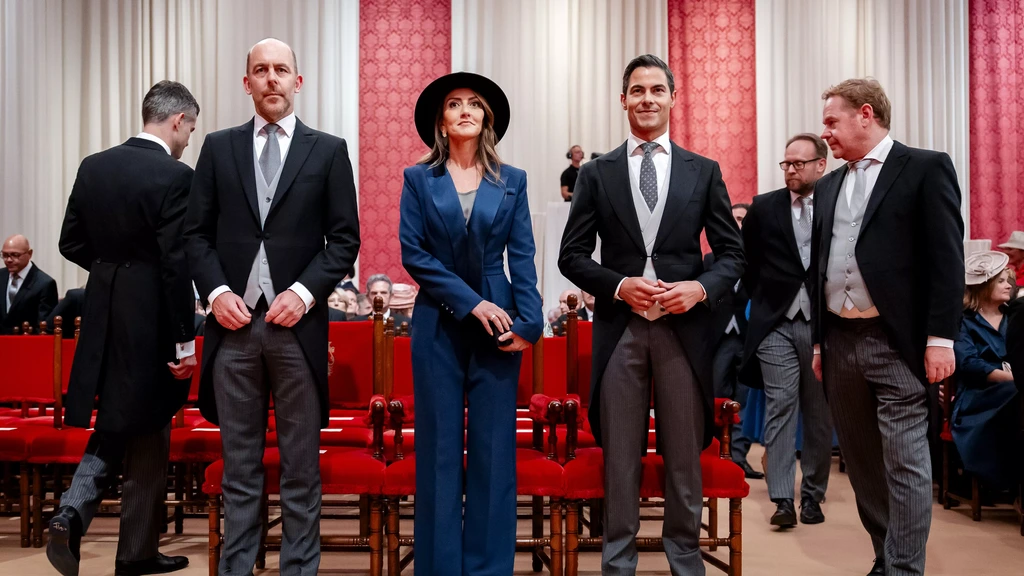
The Netherlands is still absorbing the shockwaves from a turbulent Prinsjesdag, but for internationals living here, the real question is simpler: what does this political chaos mean for my residence permit, my benefits, and my future in this country? The answer, as this week's Algemene Politieke Beschouwingen (the annual parliamentary debate on the government's plans) makes clear, is that the current minority cabinet is struggling to govern, and the consequences are already landing on the most vulnerable.
On 15 September, the traditional opening of the parliamentary year was overshadowed by protests, burning hay bales along highways, and sabotage on the rail network (NOS). The next day, the Tweede Kamer (the lower house of parliament) began two days of debate on the cabinet's budget for 2027. But this is not a government with a comfortable majority. The cabinet is a minority one, meaning it needs support from opposition parties to pass laws. As NOS reports, the question of whether the budget will secure a majority in both the Tweede and Eerste Kamer (the Senate) is "far from a done race."
For expats, the most immediate concern is the cabinet's struggle to fund the right to bijstand (welfare benefits). On 18 September, news broke that the cabinet must again find money to guarantee this right (NU.nl). This is not just an administrative detail. If you lose your job and need to rely on bijstand while you search for a new one, the uncertainty over funding could affect how quickly you receive payments — or whether you receive them at all. The cabinet's struggle to find money is a direct result of its minority status, forcing it to negotiate with opposition parties that have their own priorities.
Meanwhile, the political landscape has shifted further. On the same day, the cabinet announced it would not continue talks with the BBB (BoerBurgerBeweging, the Farmer-Citizen Movement), with the prime minister quoted as saying, "Half vertrouwen bestaat niet" — 'half trust does not exist' (NU.nl). This break with the BBB, which had been a potential source of support in the Senate, weakens the cabinet's already slim chances of passing legislation. For expats, this political instability can delay decisions on everything from immigration policy to housing.
And housing is another pressing issue. On 21 September, the cabinet presented a plan for rapid housing construction to tackle the acute shortage (NU.nl). For internationals, this is welcome news — the housing crisis affects everyone, but it's particularly acute for those arriving on a residence permit who often struggle to find a home in a competitive market. But the plan's success is not guaranteed, especially given the political headwinds.
Beyond the budget and housing, a separate report from the Onderzoeksraad voor Veiligheid (the Dutch Safety Board) has exposed a national scandal that should concern every international with children. On 21 September, the Board issued a damning report on the structural neglect of children in asylum emergency shelters. Minister Van den Brink of Asylum has been given six months to improve conditions, with the Board stating that 7,000 children are being systematically exposed to unsafe situations that threaten their development (NOS). The report describes a system where children live in offices, ships, and container homes, with little privacy, frequent moves, and a constant sense of insecurity. The Board's chair, Chris van Dam, said bluntly: "Nederland is door de ondergrens gezakt" — 'the Netherlands has sunk below the bottom line.'
For expats, this report is a reminder that the Dutch system, often praised for its efficiency, has serious cracks. And it raises a political question: can a minority cabinet, already struggling to find alliances, address such a deep-rooted problem? The answer, so far, is unclear.
In the Algemene Beschouwingen, the tone was fierce. Opposition leaders criticized the cabinet's plans, with Pro-leader Klaver calling the government "stuurloos" (rudderless), and SP-leader Dijk calling the budget "a slap in the face" (NOS). The king's speech, which traditionally outlines the government's plans, urged unity: "Democratie moet mensen verenigen, niet uit elkaar spelen" — 'democracy must unite people, not drive them apart.' But the protests on Prinsjesdag suggest that many Dutch citizens feel unheard.
For internationals, the takeaway is this: the political uncertainty is not just an abstract issue. It affects your rights, your benefits, and your ability to find a home. The cabinet's fragility means that nothing is guaranteed. As the debate continues, keep a close eye on the budget negotiations — they will determine the Netherlands' priorities for the coming year, and whether the country can address the issues that matter most to you.
Sources
- Na bewogen Prinsjesdag is de vraag of kabinet en Kamer elkaar eindelijk weten te vinden September 16, 2026
- Wekdienst 16/9: Algemene Beschouwingen • Rechtszaak explosie Osdorp September 16, 2026
- Kabinet praat nog niet verder met BBB: 'Half vertrouwen bestaat niet' September 18, 2026
- Kabinet moet opnieuw geld zoeken om op het recht op bijstand te wijzen September 18, 2026
- Kabinet komt met plan voor snelle woningbouw om huizentekort aan te pakken September 21, 2026
- Onderzoeksraad: 7000 kinderen in asielnoodopvang structureel verwaarloosd September 21, 2026
Part of the dossier
Prinsjesdag en Algemene Politieke Beschouwingen →