Pro chooses Brussels home: Social Democrats over Greens, Kitty Jong becomes party chair
Pro, the Dutch left-wing fusion party, has voted to join the European Social Democrats rather than the Greens in a binding referendum, with 65% support. Kitty Jong was elected as the party's first chair. The decision settles a split among its eight MEPs and shapes the party's influence in Brussels.
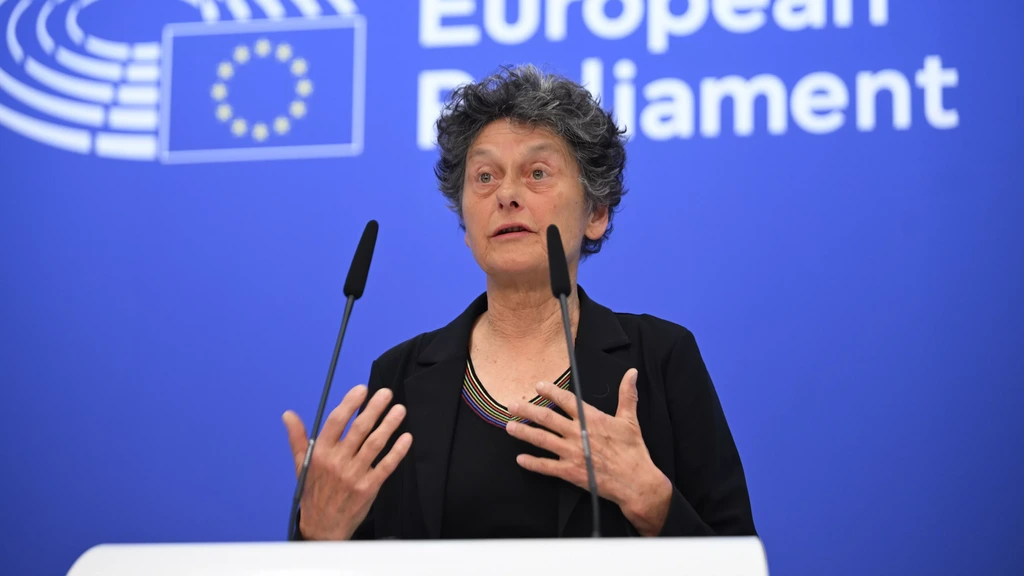
If you're an EU citizen in the Netherlands who voted for the PvdA or GroenLinks in the last European election, the new left-wing fusion party Pro has just made a decision that changes where your MEPs sit in Brussels. In a binding membership referendum held this week, 65% of Pro members voted to affiliate with the European Social Democrats (PES) rather than the European Green Party (EGP), NOS reports.
The vote settles a public split that had divided the party's eight-member European Parliament delegation. Four MEPs had said they wanted to join the Greens, four wanted the Social Democrats. The party board had set up an advisory committee — former PvdA politician Mariëtte Hamer and ex-GroenLinks member Nel van Dijk — which recommended the Social Democrats, and the leadership backed that advice. Now the members have confirmed it, with 65% of those voting on the side of "red" instead of "green."
The same referendum also elected Kitty Jong, former vice-chair of the FNV trade union federation, as Pro's first regular party chair. She won more than 50% of the vote, beating Frank van de Wolde, chair of the RoodGroen activist group that pushed for the merger, and Michiel Servaes, director of Oxfam Novib. Jong succeeds interim co-chairs Esther-Mirjam Sent and Kathinka Eikelenboom, who step down on 1 October after leading the merger process, according to NOS.
Why this choice matters
Pro was formed in June 2026, when the Labour Party (PvdA) and GreenLeft (GroenLinks) completed their merger into one Dutch party. But the merger didn't automatically translate into one European group. In Brussels, parties sit in larger political families, and Pro's eight MEPs have been operating across two groups — an awkward arrangement that also complicates European Parliament funding, which depends in part on group membership.
The two options were not identical. The Social Democrats are the second-largest group in the Parliament, with roughly 135 seats, giving them more weight in coalition-building and committee assignments. The Greens, who lost seats at the last election, are the sixth-largest group with about 53 seats. They are often more assertive on climate and environmental policy, while the Social Democrats tend to prioritise workers' rights and social policy.
Pro's members chose the larger, more influential group, but the referendum explicitly included a desire to "keep the strongest possible connection" with the Greens. That reflects the party's identity as both red and green — a compromise that may be easier to state than to practice.
Internal friction ahead?
Four sitting MEPs, including Tineke Strik, publicly said before the vote that they preferred the Greens, arguing that their values and the scientific consensus on climate pointed that way. They will now have to adapt to life inside the Social Democrat group. Whether that creates lasting internal friction is an open question, as is how Pro will position itself in the next European election campaign, NU.nl reported.
For internationals in the Netherlands: this is one of those moments where Dutch political processes directly shape EU-level representation. If you voted for a Dutch left-wing party in 2024, your ballot has helped determine which political family the Netherlands' progressive voice sits with in Brussels. The decision is binding, and with a new party chair in place, Pro now moves forward as a single bloc — on one side of the aisle. That internal tension is worth watching.
Sources
- Rood of groen? Europese keuze verdeelt de Pro-fractie September 2, 2026
- Pro in Europa bij sociaaldemocraten; Kitty Jong wordt partijvoorzitter September 25, 2026
- PRO sluit zich aan bij sociaaldemocraten in Europees Parlement September 25, 2026
Part of the dossier
Pro Party's European Alignment Dilemma →