From Downpours to Drought: How the Netherlands’ Wild August Weather Affects Expats
The Netherlands faced both thunderstorms and drought in August 2026. Expats should be aware of KNMI code-yellow warnings for travel disruption, and that low water levels are causing inland shipping delays and potential price increases on imported goods.
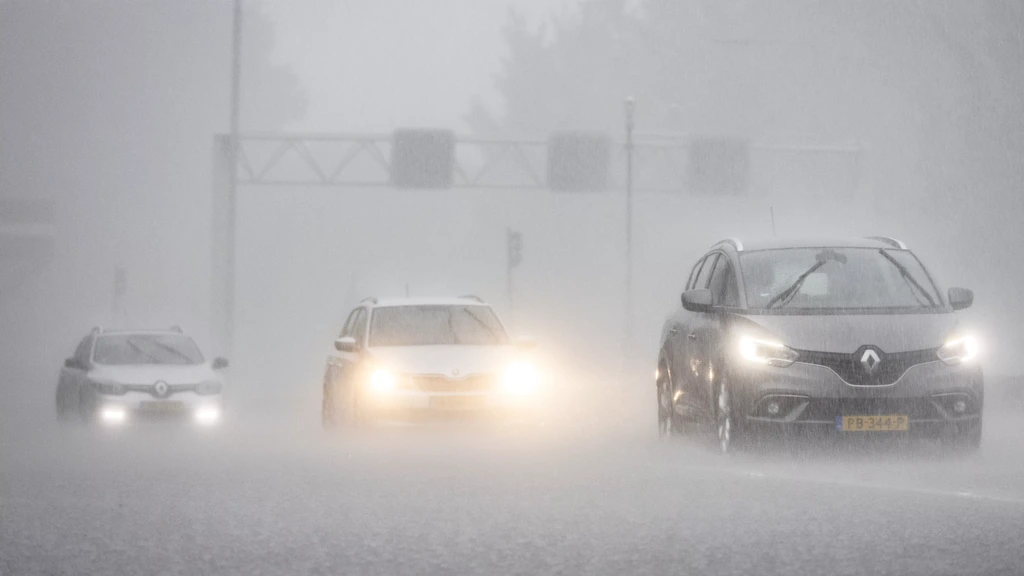
If you spent August in the Netherlands, you probably noticed two extremes: sudden torrential thunderstorms that flooded streets in the north, and a dry spell that left rivers so low that barges could barely move. Both events have practical consequences for anyone living here — from evening commutes to the price of goods at the supermarket.
The storms: code yellow and a rare heavy-rain warning
On 31 August 2026, the Royal Netherlands Meteorological Institute (KNMI) issued a code yellow (code geel) thunderstorm warning for the entire country. In the province of Noord-Holland — particularly the Kop van Noord-Holland (the northern tip) — an additional heavy rain warning was in effect until 18:00, meaning the evening rush hour was at risk of disruption. Some places received up to 70 mm of rain in 24 hours, roughly half of what normally falls in the entire month of August (NL Times; NOS).
The KNMI explained that such a specific rain warning is rare — code yellow is issued from 50 mm, and code orange would start at 75 mm. The downpours also brought small hail and wind gusts of 60–70 km/h. While the worst passed by evening, the advice from the KNMI was to stay alert (blijf opletten) on the road, especially in the Randstad where the storms moved inland during the afternoon.
What this means for expats: If you cycle, drive, or rely on public transport, check KNMI’s live warnings before heading out during a code-yellow day. Flash floods can make low-lying streets impassable, and train delays are common. The +316 NS app will show disruption alerts. And if you’re renting, your gemeente (municipality) can advise on flood-protection measures — particularly if you live in a basement apartment.
The drought: inland shipping’s worst August in 15 years
Just over a week later, on 9 September 2026, Statistics Netherlands (CBS) reported that inland shipping had transported 18.8% less cargo weight in August compared to the same month a year earlier — the lowest August figure in 15 years (NL Times). The cause: low water levels on major rivers like the Rhine, which forced vessels to carry less weight per voyage to avoid running aground.
While the number of trips actually increased by 3.4% (vessels had to sail more often to move the same amount of goods), the average load per voyage dropped to 1,299 tonnes — comparable to drought years 2019 and 2022, but well below the typical August average of around 1,500 tonnes. Cross-border freight was hit hardest: goods arriving from Germany fell by 49.5%, and outgoing shipments to Germany dropped 39.7%. Transit traffic passing through the Netherlands collapsed by 50.1%. Domestic freight remained stable (+0.4%).
What this means for expats: Inland shipping is the backbone of Dutch logistics — it moves everything from construction materials and fuel to food and consumer goods. A drop of this magnitude can lead to higher prices (inflation pressure) and delays in shops and online orders. If you notice that certain imported products, especially German goods, are slower to arrive or more expensive, low river levels are very likely the culprit. The drought also affects your energy bill: coal and biomass for power plants are often shipped by barge.
The bigger picture: prepare for more weather extremes
Neither the thunderstorm nor the drought is a one-off. The KNMI expects that climate change will make both heavy downpours and dry summers more frequent. The CBS data shows that this is now the fourth time in the past decade that August inland shipping has been seriously disrupted by drought (2018, 2019, 2022, and now 2026). For expats, that means: learn to check water levels before assuming that online delivery will arrive in two days, and keep an umbrella handy even when the forecast looks sunny — Dutch weather can change in minutes.
For practical updates:
- KNMI weather warnings: knmi.nl/waarschuwingen
- River water levels (Rijkswaterstaat): waterinfo.rws.nl
- CBS data on shipping: cbs.nl
Sources
- Code yellow: More thunderstorms crossing Netherlands today; Dryer weather tomorrow August 31, 2026
- Speciale waarschuwing voor zware regen in kop van Noord-Holland August 31, 2026
- Inland shipping dropped 19% in August due to drought September 9, 2026
Part of the dossier
Weather Warnings and Thunderstorms in the Netherlands →